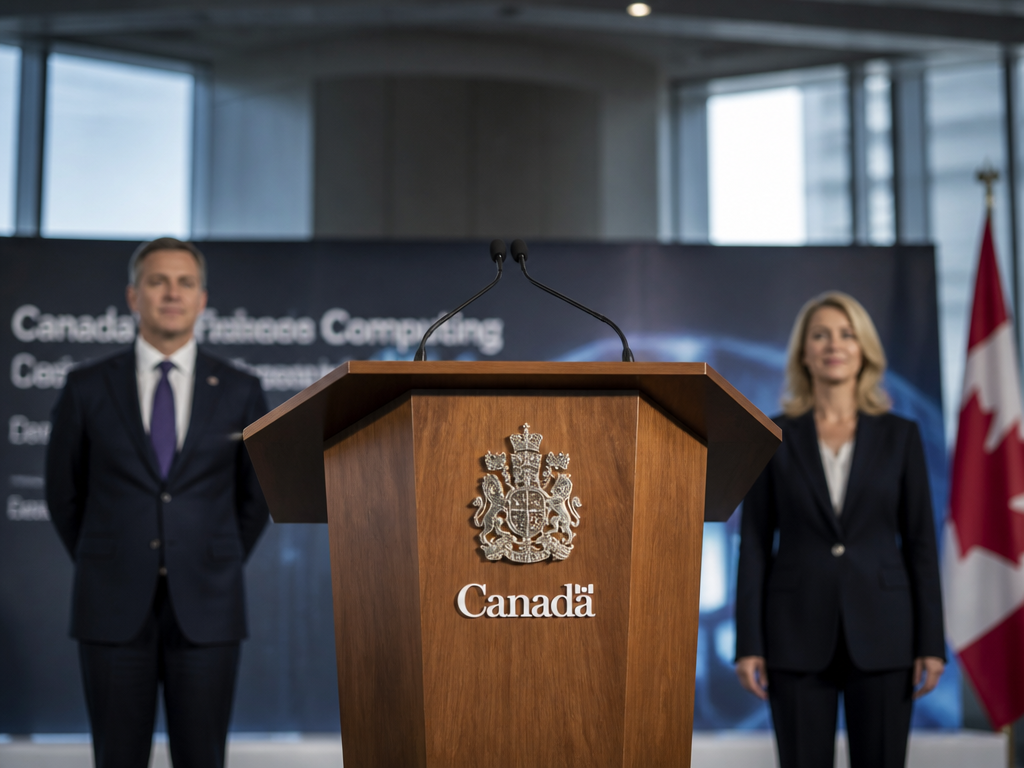
When the cameras cleared after this year's G7 summit, three things were true at once, and all three contradicted each other.
The Iran agreement was "done." It had also not been finished — signed digitally by negotiators, with a formal ceremony still pending and a president who told reporters that if it fell apart, "we'll go back to shooting at them, dropping bombs." Ukraine had won fresh air-defense commitments and a 60-day ceasefire framework. The framework committed almost nobody to almost nothing past day 60. And underneath both stories, mostly unspoken in the official readout, a fight over who gets access to advanced AI was quietly redrawing the economic map of the alliance.
If you came away from the summit confused about whether anything was actually settled, you read it correctly. That confusion is not a failure of your attention. It is the most accurate signal the meeting produced. This is the lesson nobody hands you when you start tracking diplomacy: a summit communique is not a scoreboard. It is a negotiating position wearing the costume of a conclusion.
What most people do: read the summit as a scoreboard
The default move — and it is the move every cable segment and most wire ledes make — is to ask who won. Did Trump get his Iran deal? Did Zelenskyy get his weapons? Did the Europeans get reassurance? The summit gets graded like a game with a final whistle, and the headline picks a winner.
The problem is that this framing assumes the document at the end is the outcome. It is not. With this G7, the documents are deliberately unstable.
Consider the Iran agreement. The Vice President said the text of the memorandum, already signed digitally, would be released within the week, with a formal signing planned at a Swiss resort. That sounds like a settled fact. But in the same news cycle the president kept the threat of renewed strikes explicitly on the table. Both statements are official. Both are true. A scoreboard reading forces you to pick one — "deal reached" or "war still possible" — and whichever you pick, you will be wrong by Thursday.
The scoreboard habit fails because it treats announcement as enforcement. In international affairs those are different categories, and the gap between them is where almost everything that matters actually happens.
What the evidence suggests: the contradictions are the document
Here is what the paper trail actually shows when you stop trying to resolve it.
The Iran agreement exists and does not exist simultaneously, on purpose. A digital signature among negotiators is real, but it is not ratification, and it is not implementation. The pending ceremony is leverage: it can be delayed, conditioned, or used as a pressure point. Keeping "we'll go back to dropping bombs" in the public record is not a slip. It is the enforcement mechanism, stated out loud, because the agreement itself has no other teeth yet. The threat is the treaty until the text and its verification terms are public.
This matters beyond Iran because of what runs through the Strait of Hormuz. Disruptions there move fuel prices and, less obviously, fertilizer costs — the kind of second-order effect that turns a regional security question into a grocery-bill question across continents. A summit can announce calm. The shipping lanes report the truth on a delay.
The "60-day ceasefire" commits less than the number implies. A ceasefire framework with a fixed window is two promises bundled together: a near-term pause and an unwritten question about day 61. The G7's air-defense commitments to Ukraine are concrete and verifiable — hardware, deliveries, timelines. The 60-day clock is the soft part. What it actually commits the parties to is a renegotiation, not an ending. Read it as a deadline for the next argument, not the close of this one.
The AI restrictions are the structural story hiding under the tactical wins. The headlines were Iran and Ukraine. The thing that may outlast both is the emerging split over which countries get reliable access to advanced AI systems and the chips that run them. European analysts have started naming the anxiety directly: if access can be granted, it can be withdrawn, and a continent that depends on someone else's models and hardware is exposed in a way that no air-defense package fixes. One expert's characterization of the European position — that the bloc could be left dependent on infrastructure it does not control, "whatever that turns out to mean" — is worth sitting with precisely because even insiders won't define it yet.
That undefined edge is the point. Iran and Ukraine are tactical: specific conflicts, specific timelines. The AI question is structural. It is about who the alliance is in ten years, and it was not put to a vote. It surfaced as nervousness in the margins of a meeting about other things.
What I actually do: read for the verb, the clock, the teeth, and the dependency
When I work through a summit readout now, I stop asking who won and run four questions instead. They take about twenty minutes and they survive the next news cycle.
| What to find | The question it answers |
|---|---|
| The verb | Did anyone commit, agree, intend, or merely discuss? "Will deliver" and "remain committed to exploring" are different planets. |
| The clock | Is there a date? What happens the day after it? A timeline with no day-after clause is a scheduled re-fight. |
| The teeth | What enforces this — a mechanism, a penalty, or a verbal threat in a press conference? If the enforcement is a quote, the agreement is a quote. |
| The dependency | What does this arrangement assume someone keeps providing — chips, fuel, weapons, models — and who controls the tap? |
Then I do one more thing: I read for what is absent. The AI fault line barely appeared in the formal language, which is exactly why it deserved the most attention. The strongest signal at this G7 was not in the communique. It was in the anxiety that didn't make it into the communique.
Run those questions on the Iran "deal" and you get: strong verbs, a pending date, enforcement-by-threat, and a dependency on Hormuz staying open. Run them on Ukraine: concrete delivery verbs, a 60-day clock with no day-61 clause, real materiel as teeth. Run them on AI and three of the four boxes are blank — which tells you it isn't an agreement at all yet. It's a pressure building toward one.
What this didn't answer
I can't tell you whether the Iran text, when it's published, will match what the negotiators signed digitally, or whether the ceremony happens on schedule or slips. I can't tell you what the parties do at day 61 of the Ukraine ceasefire, because that clause does not exist yet. And I can't tell you where the AI split lands — whether it hardens into a formal tiering of access or dissolves into a procurement footnote.
Where to look next: not the next summit's opening statements, but the boring documents that follow it — the published memorandum text and its verification terms, the actual delivery schedules for Ukrainian air defense, and any export-control or chip-access rule that gets quietly issued in the weeks after everyone goes home. The headline is written at the summit. The outcome is written afterward, in the fine print nobody live-tweets.
A summit tells you what leaders agreed to say. What they agreed to do shows up later, in the verbs, the clocks, and the things they left out.