I got a rejection in March that I still think about. Not a FAANG rejection — a 340-person engineering org at an insurance company outside Hartford, a backend role I was qualified for in a boring, checkable way. The recruiter's note said the req had been "absorbed into an AI efficiency initiative." Eleven days later the same req was live again. Same title, same team, same three bullet points. Posted band roughly $20,000 lower.
That email is the entire argument about tech industry layoffs 2026 compressed into four sentences, and it's why I want to answer the question you have almost certainly asked yourself at 2 a.m. with a laptop on your chest: am I out of work because a model can do what I do, or because somebody needed a story?
My answer in one sentence, which the rest of this piece exists to defend: AI is genuinely absorbing a narrow band of tech work, but most of the cuts announced under an AI banner are a late, expensive correction of 2020–2022 hiring, wearing the only jacket that plays well on an earnings call.
Why "AI did it" is the cheapest sentence in tech
Put yourself on the other side of the announcement. You are cutting 1,800 people. You have four ways to explain it.
You can say you overhired — which means admitting the prior leadership team, often you, misread a demand curve by three years and burned a few hundred million dollars doing it. You can say demand softened, which invites the analyst on the call to ask which segment, and for how long. You can say nothing, and let the reporting fill the vacuum. Or you can say you're reallocating headcount toward AI.
Only the fourth one is forward-looking. It converts a write-down of past judgment into evidence of present vision. It costs nothing, contradicts nothing in the filings, and — this is the part that matters to you — it's unfalsifiable from the outside. Nobody outside the company can check whether the 1,800 roles were substituted by a model or merely deleted.
I'm not claiming executives are lying. I'm claiming they're choosing, among several true-ish framings, the one with the best return. That's not a conspiracy. That's a communications department doing its job.
How I read a layoff announcement now
After about a year of tracking these, I stopped reading the headline and started reading four things. These are the criteria I'd actually use, and you can apply all four in under ten minutes.
Which functions got cut. If a company tells you AI made its engineers redundant, look at whether the cut roles were engineers. Frequently they aren't. They're recruiting, learning and development, technical program management, support, marketing ops, internal tooling teams, and the middle layer of managers who were hired to manage people who no longer exist. That's a cost center being pruned. It's a real event with real human cost, and it has close to nothing to do with model capability.
Timing against the capital announcement. When cuts land within a few weeks of a large data center or compute commitment, the causal story being implied — we're funding AI with these savings — usually doesn't survive arithmetic. Severance for a few thousand people is a rounding error against multibillion-dollar infrastructure spend. The cuts aren't funding the buildout. They're providing a narrative that makes the buildout look disciplined.
Whether the reqs come back. This is the tell I trust most, because it's the one I can verify myself. Set a saved search on the company's careers page for the exact titles that were eliminated. If the role reappears in six to twelve weeks — lower band, different metro, sometimes as contract-to-hire — the job was not automated. It was repriced.
Filing language versus blog language. The public post says "AI-first operating model." The quarterly filing, where the legal exposure lives, tends to say "restructuring" and "cost optimization" and books it as a charge. When a company describes the same event two ways to two audiences, the audience with subpoena power gets the more careful version.
Where the displacement is real
I'd be doing the same thing I'm criticizing if I told you none of this is real. Some of it plainly is.
The work that's genuinely compressing is the work that was already close to templated: first-draft CRUD endpoints, test scaffolding, straightforward React components off a spec, internal documentation, the tier-one support ticket that follows a decision tree, the BI dashboard someone requested via Jira. That work didn't vanish. It got faster, and a team of eight now ships what took twelve.
But notice what that actually is. It's not replacement. It's the quiet deletion of the bottom rung — the tasks that used to be how you got paid while you learned to do the harder thing. Companies aren't firing senior engineers because a model writes better distributed systems. They're declining to hire the junior who would have spent eighteen months writing the glue code that is now generated. The displacement is real and it's landing almost entirely on people trying to get in, which is exactly the population least able to absorb it and least visible in the layoff statistics, because you can't be laid off from a job you were never offered.
Where the answer is honestly "it depends"
If you're two to four years in and were cut: the AI story is probably about 20% of what happened to you. You were expensive relative to your output in a year when the company decided output per dollar was the metric. That's a market correction, and market corrections reverse. Painful, but not a dead end.
If you're trying to get your first role: the AI story is more of what's happening to you than I'd like to admit. The rung you're reaching for is being sawed off in real time, and "apply more" is not a strategy against a structural change in what companies hire juniors to do. The honest version is that you need to arrive already able to do the thing the model can't — read a legacy codebase, argue with a product manager, own an incident — and demonstrating that costs you more evidence than it cost me.
If your role sat next to a cost center — internal tools, support engineering, sales engineering at a company with contracting sales — the AI story is a coat of paint over a budget decision that was coming regardless.
What this changes about how you actually apply
Three concrete things.
Set the saved search on companies that cut roles you'd want. The reposted req is a real opportunity, and knowing it's a repost is leverage — you know they still need the work done and you know roughly what changed.
Expect the band anchoring. When a company reposts at 12% under the prior band and calls it an AI-adjusted role, the number is a negotiating position, not a market rate. Bring your own comparable data.
And ask this in the interview, near the end, in a level voice: "How has the team's headcount changed in the last eighteen months, and what work stopped getting done?" Every company has an answer. The quality of the answer — whether they say "we cut 30% and honestly our on-call is worse" or recite a press release at you — tells you more about the next two years of your life than the compensation package does.
Who this reading is for, and who it isn't
If you're an investor trying to price these companies, this framing is useful: the market has already shown, repeatedly, that it doesn't uniformly reward AI-attributed cuts, and credit analysts have been asking harder questions about the debt funding the buildout than the press releases suggest.
If you're a job seeker who needs the anger to go somewhere productive, this framing is useful in a narrower way: it tells you not to internalize a story that was written for shareholders. You're not obsolete. You're mispriced in a bad quarter of a cycle that has run before.
If you're looking for a reason to stop applying, this isn't it, and I won't pretend otherwise. The correction reading is more optimistic than the AI reading, not less. Corrections end.
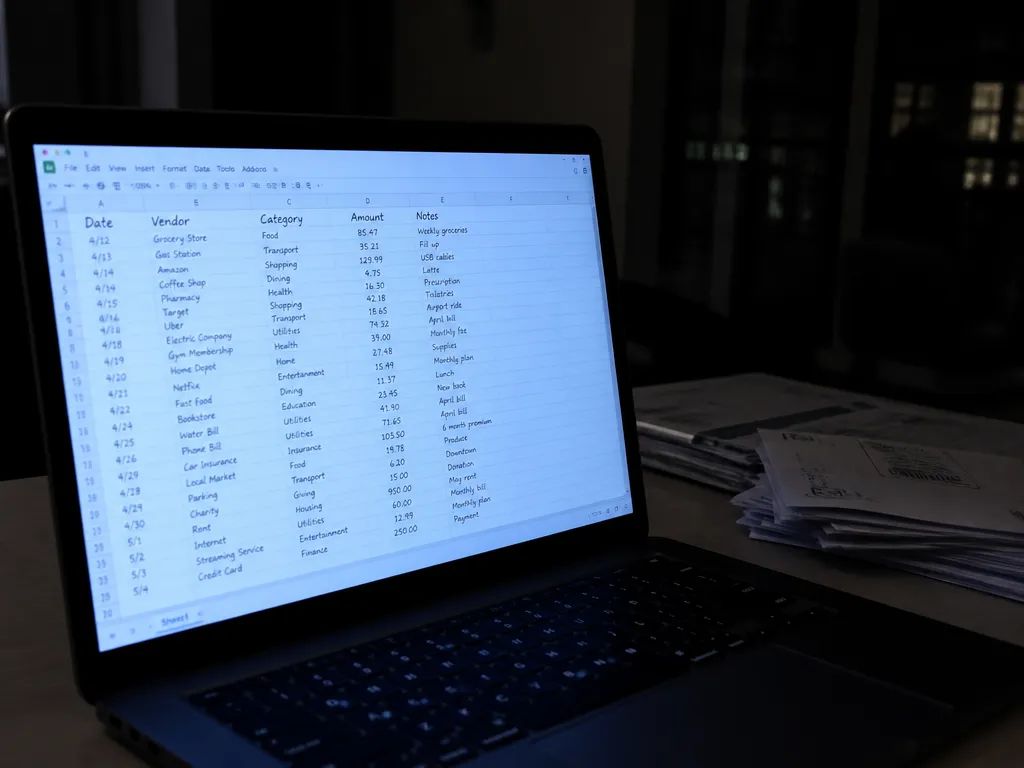
Here's the practice, not the advice. I added a fifth column to my application tracker in February — "reason given" — and a sixth I fill in later, "req status at day 60." Of the 31 roles I've been rejected from with an efficiency or restructuring reason attached, 19 were posted again within ten weeks. Nine of those were at a lower band. I applied to four of them anyway.
The company that tells you a machine replaced you, and then quietly posts your job again at a discount, has told you exactly what it thinks the machine is worth.