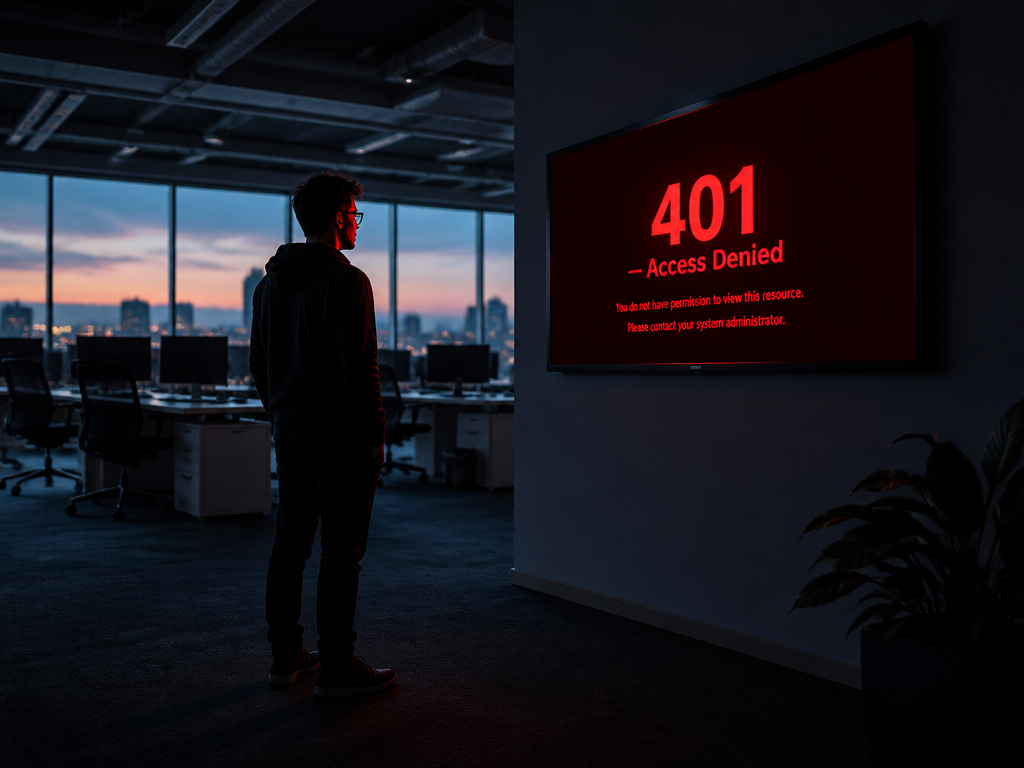
When a frontier lab disabled a cybersecurity-capable model in late 2025, it did not do so because a rule told it to. It did so because someone from the government called and said to. There was no published order. There was, by the company's own account, only verbal evidence of the concern. And the model went dark before anyone outside a small room could examine the reasoning.
This is the sixth lesson of AI regulation that almost nobody writes down: in the area where the stakes are highest — export controls on model capabilities — the enforcement mechanism has quietly detached from the published-rulebook model you were trained to expect. If you work in technology policy, government-tech relations, or enterprise AI compliance, you have probably already felt the floor shift. You have a compliance program built to read regulations. The regulation is increasingly arriving as a conversation.
What does it mean when AI export controls are enforced verbally?
It means the legal artifact you would normally rely on — a published rule, a docketed order, a citation you can challenge — does not exist at the moment you are asked to comply. The directive is communicated to the company directly, often without a written instrument, sometimes with evidence described rather than shown. The company acts first and reconstructs the justification afterward, if it can. For a profession built on reading the text and contesting it, this is a structural change, not a procedural quirk.
To understand why this matters, follow the mechanism in the order it actually unfolds.
Step one: a capability crosses a line you cannot see
It starts with capability, not paperwork. A model demonstrates — internally, or in a red-team result, or in a customer deployment — that it can do something the government has decided is sensitive. In the cybersecurity case, the concern was offensive capability: the model could materially assist in finding or exploiting vulnerabilities at a level the government considered a national-security matter.
The trouble is that the line is not drawn anywhere you can read it. Traditional export controls work off lists — specific items, specific destinations, specific thresholds in compute or performance. A capability threshold is different. It is judged after the fact, against a standard that exists in the assessment rather than in any published register. You do not know you have crossed the line until someone tells you that you have.
Step two: the contact, not the citation
The second step is the part that breaks the old model. The notice arrives as contact, not as citation. Someone reaches the company directly. The reasoning is described. In at least one documented instance, the supporting evidence was provided verbally, and the directive itself was never made public.
For the recipient, this collapses several protections at once. There is no document to forward to counsel for a clean legal read. There is no public text against which to measure whether the action is consistent with prior cases — and because this kind of capability-based control is so new, there may be no prior cases at all. There is no record that a third party could later audit. The asymmetry is total: the government holds the reasoning, the evidence, and the timeline, and the company holds the obligation to act.
Step three: compliance before verification

So the company complies, and it complies before it can verify. This is the rational move even for a firm that disputes the underlying claim. The downside of ignoring a national-security directive is existential — license loss, criminal exposure, reputational ruin at exactly the moment a company may be raising capital or pursuing a public listing. The downside of complying with a directive you think is mistaken is a disabled feature and a frustrated set of customers. Any general counsel weighing those two outcomes complies first and argues later.
That is the quiet genius, and the quiet danger, of the verbal mechanism. It does not need to win an argument. It only needs to make compliance cheaper than resistance. The company can say, accurately, that it believes the action rests on a misreading of the technical facts — and still take the action, because the cost structure leaves no other sane choice.
Step four: the public learns later, or not at all
The fourth step is disclosure, and it is optional. Sometimes the company says something, framing it as a dispute, naming the models, describing the consequence. Often it says nothing, because there is no obligation to and because publicizing a national-security interaction carries its own risks. The result is that the body of precedent shaping what AI systems may do is accumulating in private. Each new line drawn refines the standard, but the standard never becomes public, never gets tested in the open, and never accrues the legitimacy that comes from being written down and defended.
This is where measured skepticism is warranted. The government may be entirely right about the specific capability. The concern may be genuine and grave. But a regime can be both substantively correct and procedurally indefensible at the same time, and the second problem does not dissolve because the first is real. A standard nobody can read is a standard nobody can challenge — and a standard nobody can challenge is, functionally, whatever the caller says it is on a given afternoon.
What this means for your compliance program
If your job is to manage this risk, the old playbook — track the rules, map them to your deployments, document conformance — is necessary and no longer sufficient. The practical adjustments are narrow and worth making now.
| Old assumption | What to do instead |
|---|---|
| The rule is published before it binds you | Treat capability assessments as live triggers; flag sensitive capabilities before someone else does |
| Directives arrive in writing | Build an internal protocol for receiving, logging, and timestamping verbal contact |
| Compliance and dispute are sequential | Plan to do both at once: comply, then preserve the record to contest |
| Precedent is public | Maintain your own private precedent log, since the public one will not exist |
The single concrete next step: write down, today, who in your organization is authorized to receive a directive of this kind, and require that every such contact be documented contemporaneously — what was said, by whom, what evidence was offered, what was acted on. When the only record is the one you keep, keeping it is the work.
The myth is that AI regulation arrives as a rule you can read, contest, and plan around. The more accurate version is that, where it matters most, it now arrives as a phone call you can only obey and quietly write down.