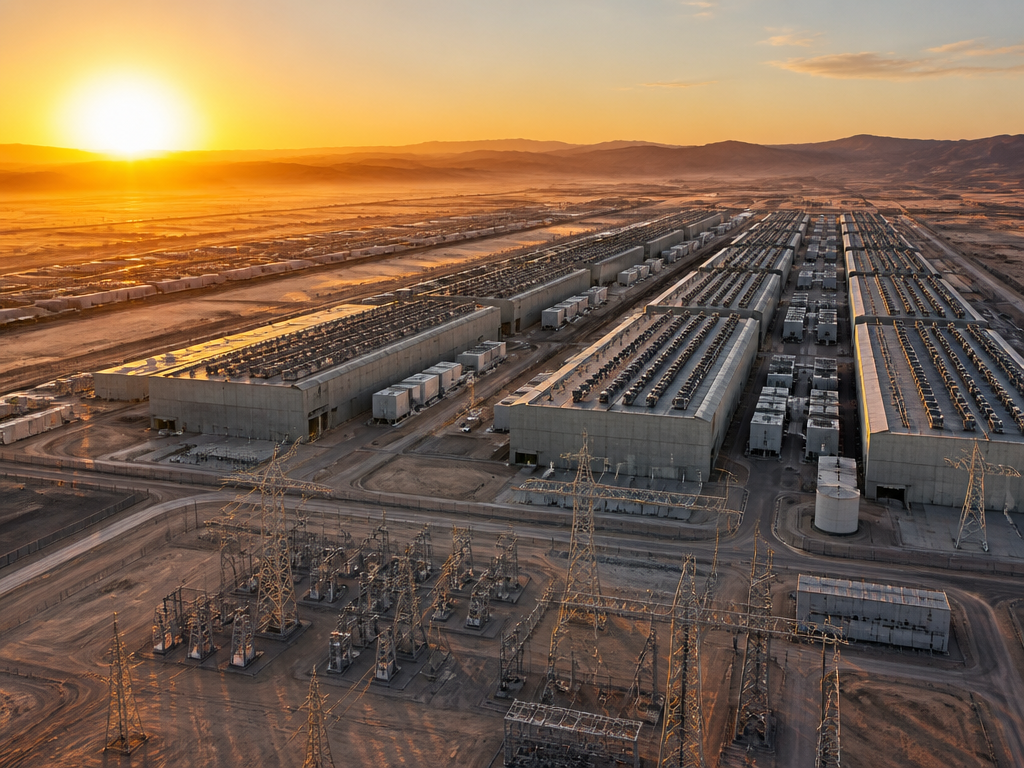
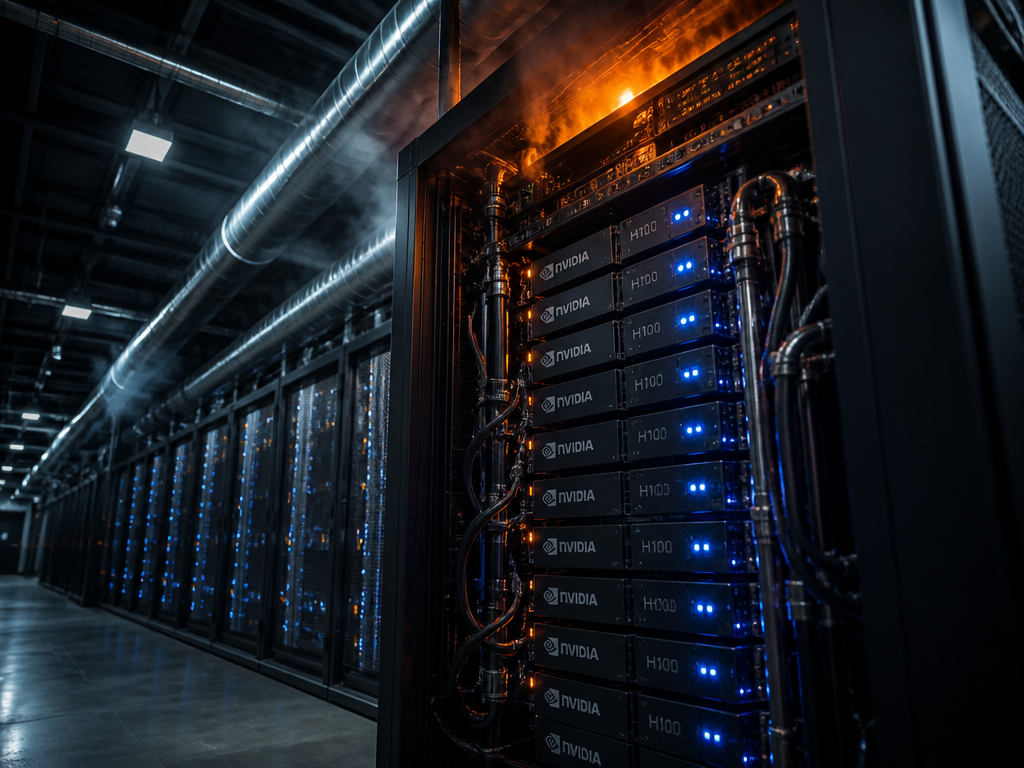
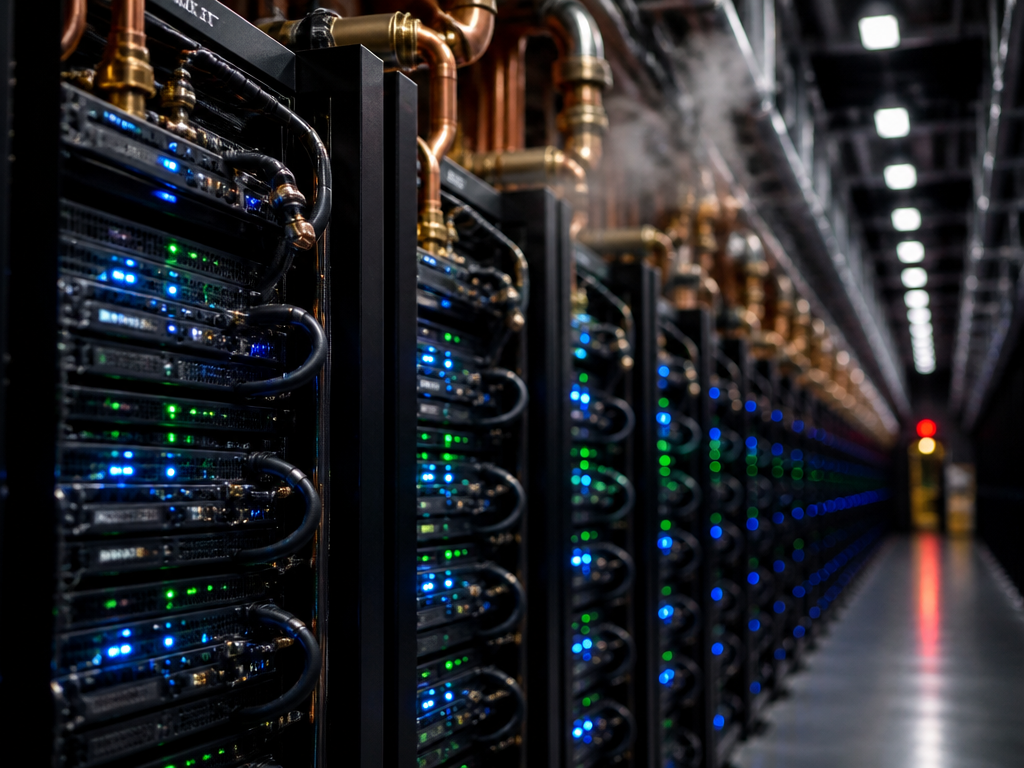
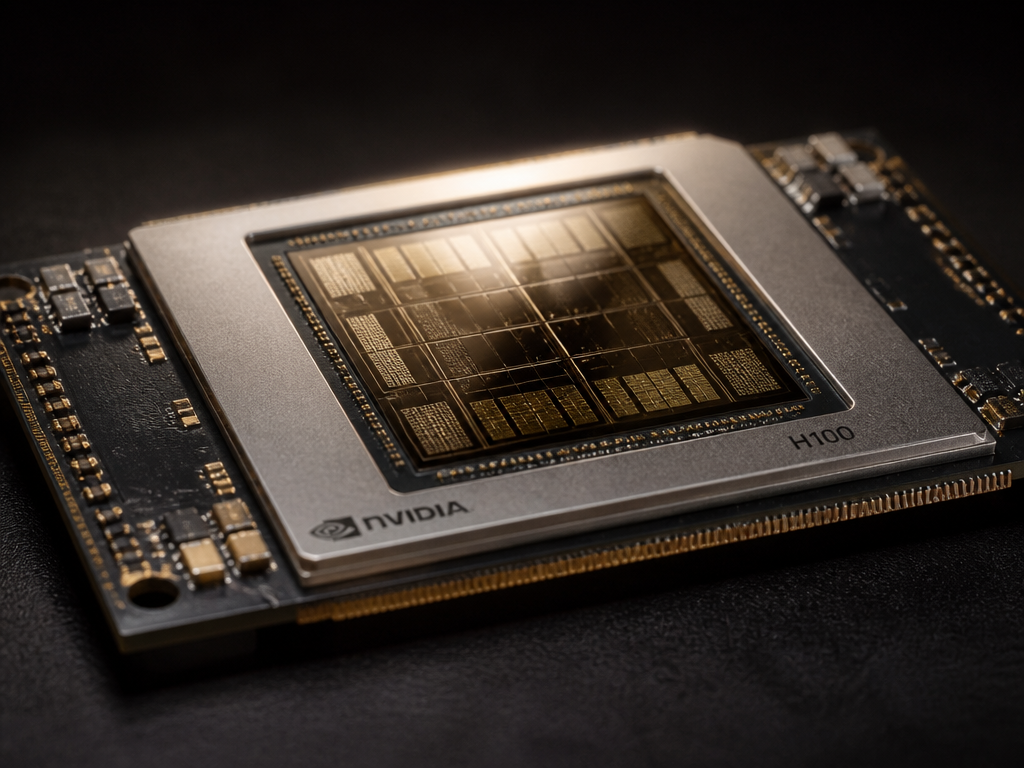
The render that got me was the blue one. A gleaming data center hanging over a curved blue Earth, solar wings spread like a dragonfly, server racks glowing through a transparent hull. It was on a pitch deck a founder friend forwarded me at 11pm with the message "am I crazy or is this insane." I stared at it for a while. Then I noticed what wasn't in the picture, and I stopped trusting the whole genre.
Orbital data centers — the plan to put racks of AI compute in orbit to escape the power and cooling crunch on the ground — are the most beautifully rendered idea in tech right now. That's exactly the problem. This is Lesson Six, the one nobody teaches you: when a plan photographs better than it computes, the render is doing a job, and the job is not engineering.
I'm not here to do the "experts say it's dumb" dance. I'm going to put three things next to each other and let you watch a verdict form: the pitch as it's sold, the physics as it actually behaves, and your own gut, which has been quietly correct this whole time and getting talked out of it by people with nicer slides.
What the pitch actually promises
Strip the deck down and every orbital-compute pitch makes three claims, in roughly this order.
First, free power. In orbit — especially a sun-synchronous orbit that stays in near-permanent daylight — your solar panels never see night, never see weather, never see a cloud. No grid interconnection queue that takes four years. No fighting a utility for 500 megawatts a town doesn't have.
Second, free cooling. Space is cold, the pitch says. Near absolute zero. Just open the window and let the void carry your waste heat away, no water towers, no chillers, no thirsty facility drinking a reservoir in the desert.
Third, escape. The ground is jammed. The AI compute buildout is bottlenecked on electricity, permits, land, transformers, and angry neighbors. Orbit has none of that. Get above the mess and you get to keep scaling while everyone else fights over substations.
It's a clean story. Every piece of it is either wrong or so incomplete that "wrong" is the kinder word. Let me take the claims in the order they break, worst first.
Criterion one: heat, and the thing the render hides
Here is the single fact that collapses most of these decks, and it's the fact the pretty picture is engineered to keep you from asking about.
In space, you cannot cool anything by convection, because there is nothing to convect into. On Earth, heat leaves your GPU three ways: it conducts into metal, that metal warms the air, and the warm air moves away — that's the fan, the chiller, the cooling tower. Water and air are the workhorses. In vacuum there is no air to warm and no water to boil off into the sky. The only way heat leaves a thing in orbit is radiation — the object glows in the infrared and sheds energy as light. That's it. That's the whole exit door.
Radiation is a slow, weak door. The amount of heat a surface can dump this way scales with its area and the fourth power of its temperature, and a data center runs "warm," not "glowing hot," so you don't get to cheat with temperature. You get to cheat with area. Which means the real object on that pitch deck — the honest version of the render — is mostly radiator. Not a sleek dragonfly. A gigawatt-scale compute cluster in space would need radiator panels measured in the square kilometers, dwarfing the racks they serve, unfolding like some absurd cooling flower with a few servers hidden in the middle.
Go back and look at any of these renders. Count the radiators. They're either missing, or they're drawn as a modest fin that couldn't cool a gaming PC. The visual is a lie of omission, and it's not an accident — the radiators are ugly, they're enormous, and they blow up the mass budget, which brings us to the next thing that breaks.
The "space is cold" line is the part that should make you angry, because it's technically true and functionally backwards. Yes, the background temperature of space is a few degrees above absolute zero. But cold vacuum is a terrible conductor. A thermos works because vacuum is a fantastic insulator — that's the entire point of a thermos. You are trying to run a furnace inside a thermos and cool it by hoping. The environment that's supposedly your free chiller is, physically, the best insulation humans have ever found.
Criterion two: mass, and the math launch costs can't fix
Fine, say the true believer. Launch is getting cheaper every year. Reusable rockets, bigger fairings, the cost per kilogram is falling off a cliff. Eventually it's cheap enough.

Let's actually run it, because this is where "eventually" does a lot of unpaid labor.
A single dense AI server rack — the kind you'd want dozens of megawatts of — weighs on the order of a ton, sometimes well over, once you count the accelerators, the power delivery, the interconnect, and the structure to hold it. A gigawatt-class facility is thousands of those racks. Now add the power system: solar arrays sized for a gigawatt of draw are their own vast structure. Add the radiators — the square kilometers of them we just established you can't skip. Add batteries or storage for orbital eclipse and load smoothing. Add propulsion and fuel to hold your orbit against drag and to dodge debris. Add shielding.
You end up needing to loft a mass that, for a genuinely gigawatt-scale installation, runs into the hundreds of thousands of tons. For context, humanity has launched something on the rough order of tens of thousands of tons into orbit across the entire history of spaceflight, Sputnik to now. A single serious orbital facility, built to the scale the pitches promise, asks you to multiply all of human launch history by a large integer — and then do it again every few years when the hardware ages out.
"But launch costs are falling." Yes. And it does not matter as much as the deck needs it to, for two reasons. One: even at aggressive future prices, multiplying by hundreds of thousands of tons produces numbers that make a terrestrial data center — including its allegedly-impossible grid connection — look like a rounding error. Two: the falling-cost curve is being quoted at you as if it's already arrived. It hasn't. Decks routinely pencil in launch prices that assume a vehicle flying at a cadence and reliability nobody has demonstrated at the moment you're reading the deck. You are being shown next decade's best case as if it's today's price sheet.
Here's the comparison that ends the argument for me. On the ground, the "impossible" bottleneck is building a substation and winning a fight with a utility. That fight is annoying, slow, and political. In orbit, the "solution" is manufacturing and launching more mass than civilization has ever put in space. One of these is a permitting problem. The other is a physics-and-budget problem the size of a national space program. The pitch has them backwards.
Criterion three: you cannot send a technician to orbit
Suppose you got past heat and mass. Now live with the thing for its lifespan.
AI accelerators age in dog years. The chips that anchor a data center's economics today are a generation behind in eighteen months and two generations behind in three years. On the ground, this is a normal, brutal capex cycle: you rack new hardware, you pull the old, you resell it, the building stays. The building is the durable asset; the silicon churns through it.
In orbit, the silicon is the asset you can't touch. There is no forklift, no night-shift tech swapping a dead drive, no RMA. A failed board is failed forever. A cooling loop that springs a leak, a power converter that pops, a bit-flip from radiation that corrupts something — on the ground it's a ticket. Up there it's a stranded asset moving at eight kilometers a second that you will never lay hands on again.
And radiation is not a footnote. The consumer and datacenter GPUs everyone wants to fly are not radiation-hardened. Space electronics that survive for years are built on old, slow, expensive, radiation-tolerant processes precisely because the good modern stuff gets its memory scrambled and its transistors degraded by the particle environment. So you're choosing: fly cutting-edge chips that die young and can't be serviced, or fly hardened chips that are years behind the ground on the day you launch. Either way the economics that made the pitch exciting — cheap flops per dollar — quietly evaporate.
Then there's what happens when the facility dies. A dead gigawatt structure with kilometers of radiator is not a tidy corpse. It's a cloud of debris risk in an orbit that's already getting crowded, in an era where a single collision can seed a cascade that makes whole altitudes unusable. The decommissioning plan is usually the emptiest slide in the deck, if it exists at all.
Where a smaller, honest version does make sense
I want to be fair, because the vindicated-skeptic move is worthless if it can't tell the difference between "impossible" and "oversold."
There is a real, defensible, unsexy version of compute in space, and it looks nothing like the render. It's edge processing for data that's already up there. An Earth-observation satellite generates enormous imagery it can't afford to beam down in full. Running inference on-board — detecting ships, wildfires, crop stress, deforestation — and sending down only the answers instead of the raw pixels is genuinely smart. It's a few chips, sized to a few watts or tens of watts, cooled by a modest radiator, doing work where the data is born. That's not a data center. That's a good idea wearing sensible shoes.

The gap between "put a small inference chip on the satellite that took the photo" and "loft a gigawatt AI cluster to escape the electrical grid" is the entire distance between engineering and theater. The honest version has been quietly working for a while. It doesn't need a blue render because it isn't raising a round on vibes.
The question the deck is built to keep you from asking
So why does the impossible version keep getting funded?
Follow the timing. These announcements tend to cluster around fundraising moments, around narrative windows when "AI plus space" is the phrase that opens checkbooks, around the specific instant when a launch provider's valuation benefits from a big new category of demand appearing on the horizon. A grand orbital-compute vision creates a story where launch demand goes vertical for decades. Whether the data center ever flies is almost beside the point if the vision itself moves a valuation, closes a round, or gets a founder a headline that recruits the next twenty engineers.
I'm not claiming everyone in this space is cynical. Plenty of the people building it are sincere and technically serious, and some of them will produce that useful small version. But sincerity is not a heat exchanger. The tell isn't the founder's motives — it's the order of operations in the pitch. A real infrastructure plan leads with the constraint that's hardest to beat and shows you the ugly part first: here's the radiator problem, here's what it does to our mass, here's how the numbers survive it. A fundraising instrument leads with the render and puts the thermodynamics in an appendix, if anywhere.
You've been shown the render first every single time. Now you know what that ordering means.
A field guide for reading any moonshot infrastructure pitch
You don't need a physics degree to pressure-test one of these. You need to ask the questions the deck is arranged to skip. Here's the version I use, applied to compute-in-orbit but portable to any "escape the constraint" infrastructure story.
| What they show you | What to ask instead | What a real answer looks like |
|---|---|---|
| "Free cooling — space is cold" | Where does the waste heat go, and how big is the radiator? | A radiator area number in the same order of magnitude as the compute, shown in the render |
| "Free power — permanent sunlight" | What's the total system mass, including power and cooling? | A mass budget you can multiply by a launch price yourself |
| "Launch costs are collapsing" | What price per kilogram, at what flight cadence, that exists today? | A number tied to demonstrated flights, not a projection |
| "Latest-generation accelerators" | Radiation-hardened or not, and what's the service and refresh plan? | An honest admission there is no service, and a lifespan-adjusted cost |
| A beautiful render of the whole system | Where is the ugliest, biggest, heaviest subsystem in this picture? | It's visible, and it dominates the image |
| A total-addressable-market slide early | What's the single hardest physical constraint, and is it on slide two or slide twenty? | Hardest constraint leads; TAM comes after |
Run any of these decks through that table tonight. The good projects survive it and often get more interesting under the pressure. The theater falls apart at the first cell.
The verdict that formed while you read
I told you I'd let the verdict emerge instead of announcing it. Here's where the three things I lined up ended up.
The pitch promises free cooling, free power, and escape from the grid. The physics answers that cooling in vacuum is the hardest part and the pitch hides it, that mass and launch economics turn a permitting headache into a problem the scale of a national space program, and that orbit is the one place you can never send a technician to fix the fastest-aging hardware you own. Your gut, the thing that made you screenshot the render and text a friend "am I crazy," was reading all of that before you had the numbers. You weren't being a hater. You were being a good engineer.
The salvageable idea — small, on-board inference where the data already lives — is real and boring and profitable and would never be drawn in glowing blue. Which tells you exactly which version is being sold, and why.
When a pitch shows you the render before it shows you the radiator, it's not raising money to build the thing — it's raising money on the picture of the thing, so find the ugliest, heaviest subsystem and ask why it isn't in the frame.