The funds that will dominate the next decade of capital deployment are not the ones with the deepest pockets. They are the ones fluent in two languages at once — and most of the desks covering them only speak one.
I mean that almost literally. Spend a week reading the public statements, deal memos, and earnings-adjacent commentary coming out of the largest sovereign wealth funds — the Gulf giants, the Singaporean pair, Norway's behemoth — and you notice something that has nothing to do with strategy and everything to do with grammar. The energy people and the technology people are describing the same transaction in two incompatible vocabularies. One side talks in barrels, baseload, capacity factor, levelized cost. The other talks in tokens, throughput, training runs, depreciation curves on silicon that ages in eighteen months. They are looking at the same gigawatt of power feeding the same data center, and they cannot hear each other.
This piece is about the funds that learned to read both at once, why that bilingualism is the actual competitive edge of the AI era, and how you — sitting on a corporate development team, a mid-market fund, or a geopolitical strategy desk — can tell from the outside which funds have it and which are faking it.
What a "language paradigm" actually means here
In programming, a paradigm is not a feature. It is a way of thinking about what a problem is before you write a line of code. The same task — say, "process this list" — looks completely different to someone thinking in loops and mutable state than to someone thinking in functions and transformations. Both produce a working answer. But the assumptions baked into each approach determine what is easy, what is hard, and what is invisible.
Capital allocation has paradigms too. Energy investing and technology investing are not just different sectors. They are different mental models about what an asset is, how it depreciates, what makes it scarce, and what counts as a moat.
The energy paradigm thinks in decades and physics. A power plant is a forty-year asset. Scarcity comes from geography, permitting, and the hard limits of transmission. The moat is the thing nobody else can build next to you. Risk is measured in capacity factors and grid interconnection queues. Value compounds slowly and survives recessions.
The technology paradigm thinks in quarters and obsolescence. A cluster of accelerators is a three-to-five-year asset, optimistically. Scarcity comes from supply allocation and the design lead of whoever sits at the top of the chip stack. The moat is the thing everyone else is two generations behind on. Risk is measured in utilization and the speed at which your hardware becomes a paperweight. Value compounds fast and evaporates faster.
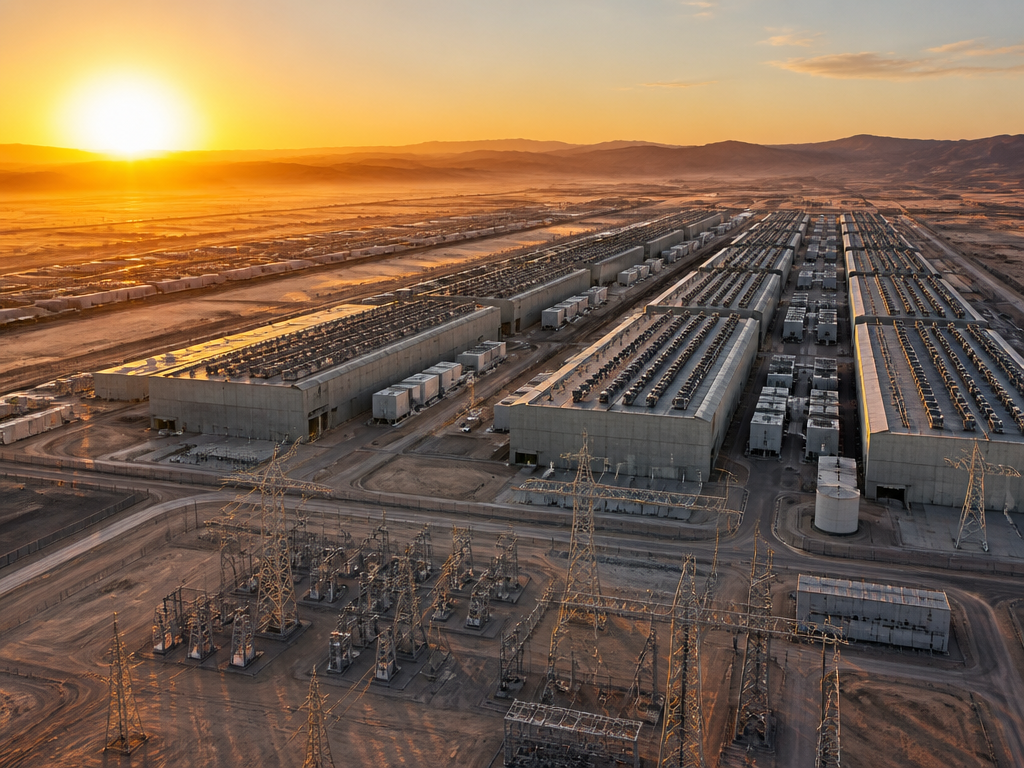
Now put a data center in front of both of them. The data center is, simultaneously, a forty-year energy asset and a three-year compute asset welded together at the meter. The energy person sees a load. The technology person sees a workload. They are both right, and if your fund only employs one of them, you will price the building wrong.
That is the whole thesis. The convergence of AI and energy is not primarily a capital problem — there is more capital chasing this than there are sites to put it on. It is a translation problem. And the funds that solved the translation got there first, not because they were smarter about the future, but because they stopped treating energy and compute as two desks that occasionally email each other.
The split that coverage keeps reproducing
If you have found the existing analysis fragmented, you are not imagining it. The structural reason is that the trade press inherited the same paradigm split as the funds it covers.
Energy coverage tracks one set of these deals: a Gulf fund takes a stake in a renewables developer, signs a long-dated power purchase agreement, backs a transmission build-out. The story is framed in the energy-transition vocabulary — decarbonization targets, intermittency, grid stability.
Technology coverage tracks the same fund's other hand: a stake in a chip designer, a co-investment in a model lab, a commitment to a hyperscale campus. The story is framed in the AI-capital vocabulary — compute scarcity, foundation models, the race for accelerators.
Two articles. Same fund. Same week. Sometimes the same physical site. And the reader who follows only the energy press never learns that the renewables stake exists to hedge the cost of the compute stake, while the reader who follows only the tech press never learns that the compute commitment was contingent on the fund already controlling the power.
You are being handed two halves of one sentence and told they are different sentences. The funds know it is one sentence. That asymmetry — they read in both languages, the market reports in one at a time — is where their advantage lives, and it is durable precisely because the reporting structure that would expose it does not exist yet.

What the bilingual fund actually does
Let me make this concrete, because "synergy across domains" is the kind of phrase that means nothing.
Consider how a fund that reads both paradigms structures a single hyperscale commitment. It does not start with the compute. It starts with the power, because power is the constraint that the technology paradigm chronically underprices.
Step one is securing generation. The fund takes a position — equity, offtake, or both — in clean generation near a viable site. In the energy paradigm this looks like a standard long-dated renewables play: stable, modestly returning, decade-scale. Read on its own, it is a slightly dull infrastructure bet.
Step two is the power purchase agreement, but read as a compute hedge. Here is the translation the siloed fund misses. A twenty-year fixed-price PPA is, in energy grammar, a way to de-risk a generation asset's revenue. In compute grammar, that same contract is a hedge against the single largest variable cost of running AI infrastructure: electricity. The energy desk priced it as revenue certainty. The technology desk needed it as cost certainty. The bilingual fund signs one instrument that does both jobs, and books the difference as edge.
Step three is the compute commitment the power makes possible. Now the fund can credibly commit to a hyperscale tenant or build a campus of its own, because it controls the input that everyone else is fighting over in interconnection queues. The scarcity in AI right now is not chips in the abstract — it is powered, permitted land. Chips you can buy. A site with firm clean power and a grid connection you cannot conjure in a quarter. The fund that owns step one and two has manufactured the scarce thing.
Step four is the financial sleight that only works bilingually. The compute asset depreciates fast — call it three to five years. The energy asset depreciates slow — call it thirty to forty. Stack them on the same site and you get a blended asset with a depreciation profile that neither paradigm produces alone: the fast-decaying silicon is wrapped in a slow-decaying power-and-land envelope that retains value long after the first generation of accelerators is scrap. The fund is, in effect, using the long asset to amortize the short one. An energy-only investor would never reach for the silicon. A tech-only investor would never own the envelope. The blend is invisible unless you are reading both columns.
None of this requires the fund to predict which model architecture wins, which chip vendor leads, or how fast intelligence scales. It requires only the recognition that compute and power are now a single coupled system priced by people who refuse to use the same dictionary.
Why the monolingual fund loses, specifically
The failure modes are not dramatic. They are quiet mispricings that compound.
A fund operating purely in the energy paradigm looks at AI demand and sees a load-growth forecast. It builds generation against that forecast as if the demand were a city or a steel mill — durable, geographically sticky, slow to move. But compute demand is not sticky. A workload can be re-routed to a cheaper region in the time it takes to sign a contract. The energy-only fund overbuilds in the wrong place and discovers its "anchor tenant" was never anchored at all. It mispriced the demand's mobility because mobility is not a concept the energy paradigm reaches for.
A fund operating purely in the technology paradigm makes the opposite error. It commits to compute capacity, signs for the chips, and treats power as a line item to be sourced later — the way you source bandwidth or cooling. Then it hits the interconnection queue and learns that "later" is four years, that the local grid cannot deliver the firm capacity the cluster needs, and that the cost of the power it casually assumed is now the variable that breaks the model's unit economics. It mispriced the input because in the technology paradigm, power has always been abundant and cheap and someone else's problem.
Both funds had capital. Both had competent analysts. Both lost to the fund that treated the power and the compute as one sentence with two clauses. The edge was never information. It was translation.
How to tell, from the outside, whether a fund is bilingual
You do not have access to these funds' internal memos. But the bilingualism — or its absence — leaks into the public record if you know the tell. Here is how to read it.
The diagnostic question is simple: does the fund's energy activity and its AI activity reference each other, or do they live in separate announcements that never touch?

| Signal | Monolingual (siloed) | Bilingual (coupled) |
|---|---|---|
| Deal structure | Energy stakes and compute stakes announced independently, months apart, no cross-reference | Generation, offtake, and compute commitments bundled in a single transaction or explicitly linked |
| Vocabulary | Press materials use either energy grammar or tech grammar, never both in one document | Same memo discusses capacity factor and utilization, PPA terms and depreciation |
| Personnel | Energy team and digital-infrastructure team report up separate chains | A single mandate owns "infrastructure" spanning power and compute |
| What's named as the asset | "Renewable portfolio" and "AI investments" as distinct buckets | "Powered land," "compute-ready sites," or campus-level assets that combine both |
| The constraint they cite | Capital availability, or chip allocation, taken in isolation | Powered, permitted, grid-connected sites — the coupled bottleneck |
When you read a fund describe its strategy and it names the coupled constraint — not "we're investing in AI" and separately "we're investing in the energy transition," but "we're securing powered sites for compute" — you are looking at a desk that reads in both languages. That single phrasing tells you more about their odds than the size of their balance sheet.
A concrete next step for your own desk
If you are evaluating exposure — as a co-investor, a counterparty, or an analyst building a thesis — run this exercise on whatever fund or sponsor is in front of you:
- Pull their last eighteen months of public announcements into one list, regardless of which press picked them up. The energy trades and the tech trades both, side by side.
- Draw a line between any two deals that share a geography or a counterparty. The lines you can draw are the couplings. A fund with many lines is reading bilingually whether or not it says so.
- Find the most recent strategy statement and count how many sentences contain both an energy concept and a compute concept. Zero is a tell. Even two or three is a different organization.
It is crude. It is also more than most coverage will do for you, because most coverage is itself monolingual and cannot see the lines.
What the bilingual framing hides
I want to resist the tidy version of this, because the tidy version is wrong in a way that matters to your capital.
The risk inside the bilingual thesis is that it assumes the two paradigms stay coupled. Right now, power and compute are welded together because compute demand is exploding faster than power supply can follow, which makes power the binding constraint and rewards whoever controls it. That is a feature of this specific moment, not a law.
Two things could break the weld. The first is technical: if model efficiency improves faster than demand grows — if the compute needed per unit of useful output keeps falling the way it has in some regimes — the power constraint could loosen. Powered land stops being scarce. The whole edge of owning the envelope evaporates, and the funds that overpaid for generation are left holding forty-year assets against a demand curve that flattened. The energy paradigm reasserts itself, slowly and unforgivingly.
The second is political. A coupled energy-and-compute asset is a concentrated thing, and concentrated infrastructure attracts sovereignty concerns. A fund that has elegantly welded its power and compute into one cross-border asset has also created a single point that a host government can scrutinize, condition, or claim. The bilingual structure that maximizes financial efficiency may minimize political resilience. The funds reading both economic languages are not necessarily reading the third language — the language of who is allowed to own coupled critical infrastructure inside someone else's borders — and that one is being rewritten in real time by governments that did not exist as buyers in this market five years ago.
So the bilingualism is real, and it is the current edge. But edges are paradigm-dependent, and paradigms shift when the constraint they were built around moves.
The question nobody can answer yet
Here is what I do not know, and what I have not heard anyone answer convincingly.
We are watching energy and compute fuse into a single asset class, priced by funds that learned to read both grammars at once. The open question is whether that fusion is permanent or transitional. Do power and compute converge into one durable thing — a coupled infrastructure category that future investors will treat as natively unified, the way we now treat a building and its land — so that the bilingual reading becomes simply the only reading? Or does the coupling dissolve once the power bottleneck eases or the politics harden, leaving the funds that committed hardest to the fused thesis holding two assets that no longer want to be held together?
The honest answer is that the depreciation math, the efficiency curve, and the sovereignty politics all point in different directions, and none of them has resolved. The funds reading in two languages have the edge today. Whether the languages are merging into one, or about to split for good, is the thing none of us can yet translate.