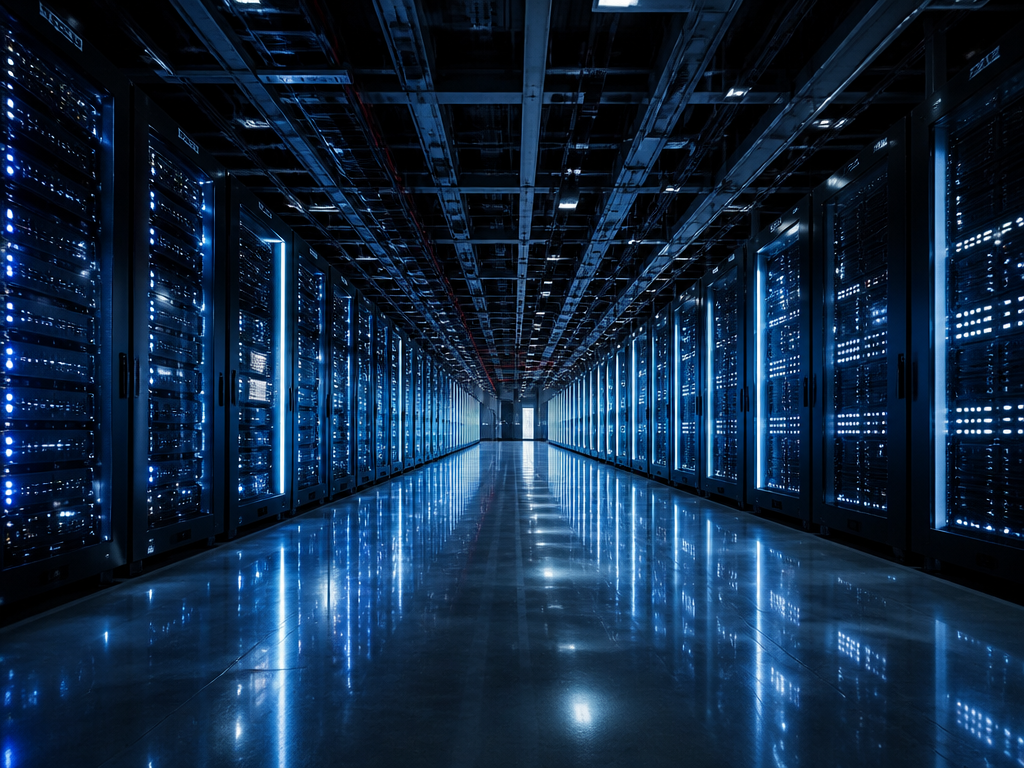
There's a ratio I keep coming back to. When MGX, the Abu Dhabi-backed AI investment vehicle, anchored a partnership aimed at mobilizing tens of billions of dollars toward data centers and the power to run them, the headline number dwarfed almost anything that fund would have parked in public equities in the same window. That gap — between what a sovereign vehicle now commits to physical compute infrastructure versus what it holds in a diversified stock book — is the whole story. And most coverage I read still files it under the wrong beat.
Sovereign wealth funds are not behaving like the wealth funds you were taught to model. The category was built to steward surpluses — oil money, trade surpluses, pension reserves — and to smooth those windfalls across generations through diversified, mostly passive allocation. That mental model is now actively misleading. The largest of these funds have spent the last few years repositioning from allocators of capital into underwriters of the AI buildout: power, silicon, and the physical plant that ties them together. If you read them through the old lens, you will keep missing where the money actually goes.
What most people do
Most analysts still track these funds the way you'd track any large institutional investor: through disclosed equity holdings, quarterly return figures, and the occasional marquee venture stake. You read the annual report, you note the shift from public markets toward private assets, and you slot the AI exposure into a "technology" bucket sitting next to the "energy transition" bucket on a different page of the same deck.
This is the analytical habit that fails you. It treats energy and compute as separate sectors covered by separate desks, when the funds themselves stopped treating them separately. It measures a balance sheet by what it owns rather than by what it is building. And it assumes the relevant signal is the size of a stake, when the relevant signal has become the structure of a commitment — a twenty-year power contract, a land parcel next to a substation, a guaranteed allocation of accelerator chips. None of those show up cleanly in a holdings filing. So the people relying on holdings filings conclude, wrongly, that not much has changed.
The deeper miss is conceptual. The old read assumes a sovereign fund's edge is patience and scale in markets. The new reality is that its edge is patience and scale in physical systems — exactly the place where private capital flinches because the payback horizon is too long and the cross-domain coordination is too hard.
What the evidence suggests
Start with the question a lot of strategy readers are quietly asking.
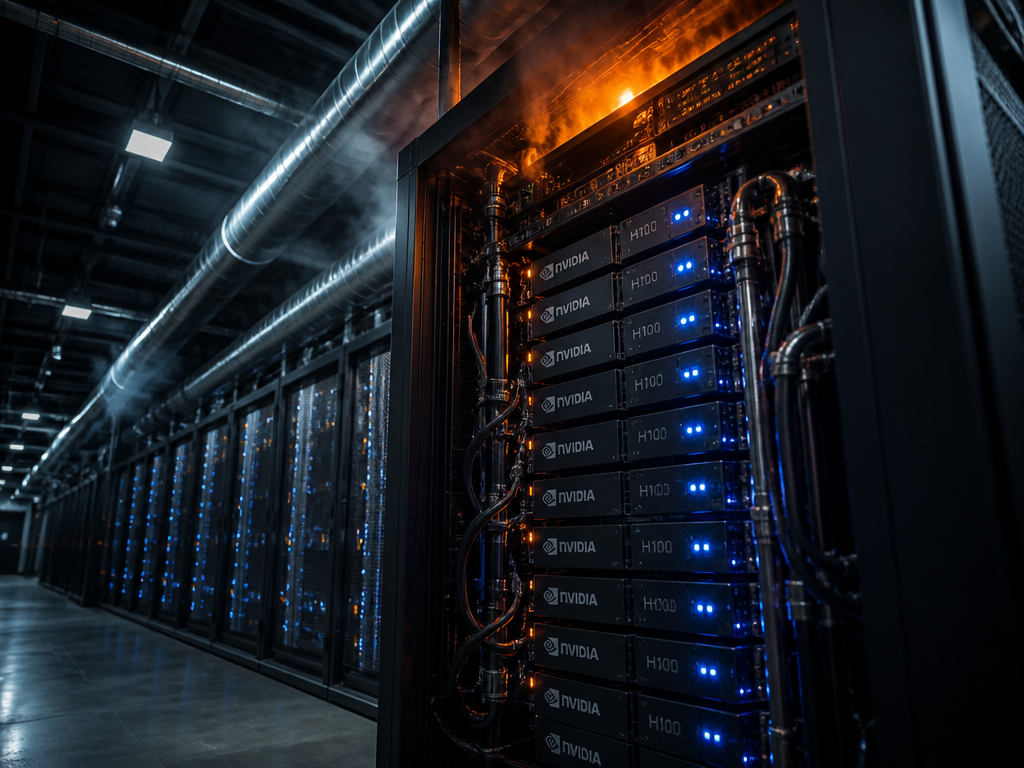
Are sovereign wealth funds investing in AI? Yes — but not mainly by buying AI company shares. The bigger move is that several of the largest funds are financing the infrastructure that artificial intelligence physically runs on: data centers, the electricity to power them, and access to the semiconductors inside them. Abu Dhabi's MGX and Mubadala, Saudi Arabia's Public Investment Fund through its Humain venture, and Singapore's Temasek and GIC have all moved capital toward compute and power assets rather than treating AI as a stock-picking theme. The exposure is structural, not just equity exposure.
Once you see it that way, the three domains stop looking like separate sectors and start looking like one buildable asset class.
The first domain is power. A modern AI data center is, functionally, an industrial load that wants firm electricity at a scale that strains regional grids. That is why the same funds chasing compute are also writing checks for gas turbines, nuclear, solar at utility scale, and the transmission to move it. Cheaper, firmer power lowers the marginal cost of training and inference; more efficient models soften the load growth. The two sides compound each other, which is precisely why financing them from a single balance sheet beats financing them from two.

The second domain is silicon — and here the constraint is not money, it is access. Advanced accelerators are scarce, concentrated in a handful of designers and one dominant foundry, and increasingly governed by export controls that treat compute as a strategic good. A guaranteed chip allocation has become more valuable than the cash to buy chips, because the cash cannot conjure supply that policy and capacity have capped.
The third domain is the physical plant: the land, the cooling, the fiber, the substations. This is the least glamorous layer and the one a sovereign balance sheet underwrites most naturally, because it pays back over decades and tolerates illiquidity the way a quarterly-reporting fund cannot.
What makes a sovereign vehicle unusual is that it can sit across all three at once. A venture fund underwrites silicon bets. A utility underwrites power. An infrastructure fund underwrites the plant. Very few instruments can underwrite the whole column on a multi-decade horizon and absorb the political risk that comes with it. Norway's fund — disciplined, transparent, deliberately constrained from this kind of concentrated industrial bet — is the exception that clarifies the rule: it could do this and chooses not to, which tells you the repositioning is a choice about mandate, not a mechanical consequence of having money.
What I actually do
I stopped reading these funds as portfolios and started reading them as infrastructure operators. That changes which signals I watch.
I no longer lead with the holdings filing. I lead with the commitments that bind physical capacity: power purchase agreements and their tenor, land acquisitions near transmission, joint ventures with chip suppliers and the size of any allocation language, and the regulatory permits that gate a data center campus. A 13F tells me what a fund owned last quarter. A signed twenty-year PPA tells me what it intends to build for the next two decades.
Here is the contrast I keep pinned above my own notes.
| The old read | The read I use now |
|---|---|
| Diversified allocator | Cross-domain infrastructure underwriter |
| Edge = scale in markets | Edge = scale in physical systems |
| Watch: equity stakes, returns | Watch: PPAs, land, chip allocations, permits |
| Energy and AI = separate sectors | Power, silicon, plant = one asset class |
| Risk = market volatility | Risk = export controls, grid policy, sanctions |
I overlay a policy layer on every position, because compute and energy are now governed by industrial strategy and export regimes, not only by markets. A fund's chip access can be rewritten by a regulatory change in a jurisdiction it doesn't operate in. So I treat policy exposure as a primary risk, not a footnote — which jurisdiction signs off, which controls apply, which alliance the capital is implicitly buying into.
And I size around the builders rather than the funds. The sovereign vehicle is rarely the cleanest instrument to hold directly; the listed turbine makers, grid-equipment suppliers, foundry-adjacent toolmakers, and data-center developers downstream of that sovereign demand often are. The fund is the signal. The supply chain it is committing to is the position.
There's a tension I don't paper over: this concentration of capital into strategic infrastructure pulls economic sovereignty toward whoever controls the stack, and that creates dependencies that can be weaponized. Reading the funds as operators makes that visible. Reading them as allocators hides it.
What this looks like lived out: every week I update one spreadsheet, and the column that has grown is not "stake size." It's "committed megawatts" — and I now scan grid-interconnection queues before I open a single annual report.